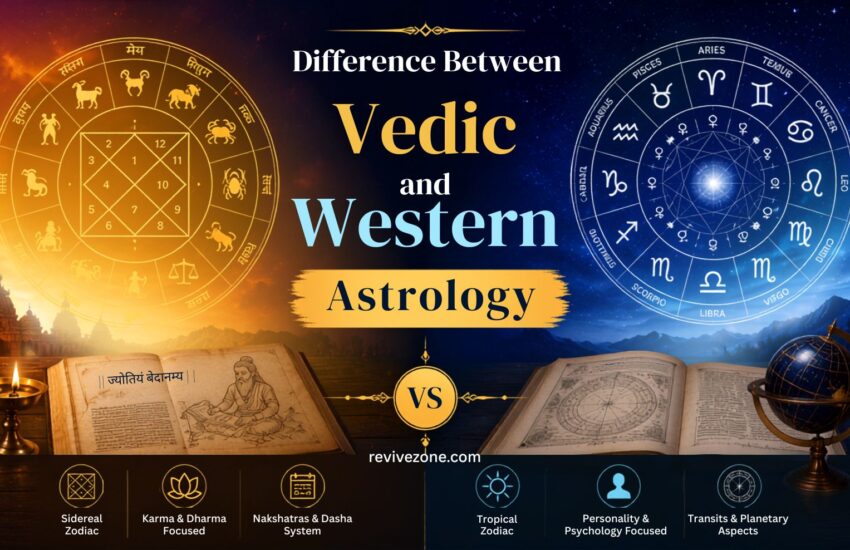
Ever gotten two totally different horoscope readings and wondered what was going on? You’re not imagining it – there’s an actual reason behind it, and it comes down to which astrological system someone used. Vedic and Western astrology don’t just split along geography. They split the sky differently, they think about fate differently, and honestly, they don’t even agree on what the stars are supposed to mean.
So let’s actually get into it. What separates Vedic astrology from Western astrology, and why does it matter which one you’re reading?
Two Very Different Starting Points
Western astrology, the kind most people in the US and Europe grew up with (think newspaper horoscopes and “what’s your sign?” small talk), traces back to ancient Greece. It’s built around the tropical zodiac, which is tied to the seasons – specifically, the position of the sun relative to the Earth at the spring equinox.
Vedic astrology, or Jyotish, comes out of ancient India and is rooted in Hindu scriptures dating back thousands of years. Instead of the seasons, it uses the sidereal zodiac, which is based on the actual, fixed position of the constellations in the sky.
That one distinction – sidereal vs tropical zodiac – is really the seed from which almost every other difference grows. Once you understand that, the rest starts to make sense.
Sidereal vs Tropical Zodiac: Why It Actually Matters
Here’s the part that trips people up. Because the Earth wobbles slightly on its axis over long stretches of time (a phenomenon called precession), the tropical zodiac used in Western astrology and the sidereal zodiac used in Vedic astrology have drifted apart. Right now, there’s roughly a 23-24 degree gap between the two.
What does that mean in practice? It means your sun sign might not be the same in both systems. Someone who’s a Western Leo could easily turn out to be a Vedic Cancer, purely because of where that gap falls. This is often the first “aha” moment people have when they start comparing the two – and it’s usually why a Vedic astrology reading can feel like it’s describing a completely different person.
Different Tools, Different Techniques
Western astrology puts a lot of weight on the sun sign – it’s the anchor of most personality readings, transits, and forecasts you’ll see in mainstream media. Aspects between planets, houses, and the ascendant all matter too, but the sun tends to take centre stage.
Vedic astrology, on the other hand, gives more importance to the moon sign (called the Rashi) and the nakshatras, which are 27 lunar constellations that add a layer of detail Western astrology simply doesn’t have. Vedic astrologers also work with dashas – planetary time periods that show you when certain influences are likely to hit hardest in your life. It’s not just about describing who you are; this system is built to nail down timing.
This is one reason people say Vedic astrology comparison discussions often center on prediction, while Western astrology conversations lean more toward self-reflection and psychology.
Purpose: Self-Understanding vs Prediction
Modern Western astrology, especially over the last century, has leaned heavily into psychology. It’s less about telling you what will happen and more about helping you understand your patterns, tendencies, and inner conflicts. A lot of Western astrologers today talk in terms of archetypes and self-awareness rather than fixed fate.
Vedic astrology takes a more deterministic view. It operates on the idea of karma – that your chart reflects consequences carried over from past actions, and that certain events are, to some degree, destined. That’s why so many people turn to Vedic astrology for real, practical decisions – picking a wedding date, timing a business launch, or figuring out when to make a big move. It’s predictive in a way that Western astrology generally isn’t trying to be.
Neither approach is “wrong” – they’re just answering different questions. Western astrology asks “who am I?” Vedic astrology asks “what’s coming, and when?”
Chart Calculation: More Than Just a Style Difference
Because Vedic and Western astrology use different zodiacs, the actual math behind a birth chart is different too. A Vedic astrologer calculating your chart will use sidereal positions, while a Western astrologer uses tropical ones – so even with the exact same birth date, time, and location, the two charts won’t line up the same way.
Vedic charts also tend to include additional layers most Western charts skip entirely – divisional charts (called vargas) that zoom into specific life areas like marriage, career, or health. It’s a more granular, almost layered approach to chart reading, compared to the more streamlined structure of a typical Western natal chart.
So Which Is More Accurate – Vedic or Western Astrology?
Honestly, this is the question everyone wants answered, and there’s no clean, universal answer. It depends on what you’re using astrology for.
If you want insight into your personality, emotional patterns, or psychological makeup, Western astrology tends to feel more intuitive and descriptive. But if you want guidance on timing – when a rough patch might hit, when opportunities are likely to show up, or when to actually pull the trigger on a big decision – Vedic astrology’s dasha system handles that. It’s built specifically to tell you when things happen, not just what they mean.
A lot of people who get deep into astrology end up using both, treating them as complementary rather than competing. Your Western chart might explain why you feel a certain way, while your Vedic chart might tell you when that pattern is likely to intensify or ease up.
Which One Should You Try First?
If you’re new to all this, a decent starting point is to think about what you actually want out of it:
- Curious about your personality and inner world? Start with Western astrology.
- Want a sense of timing and life events? Vedic astrology explained through a real reading will probably feel more useful.
- Want the full picture? Get both charts done and compare notes – it’s genuinely interesting to see where they align and where they diverge.
There’s no rulebook that says you have to pick a side. Plenty of astrology enthusiasts happily use both systems for different purposes.
Final Thoughts
Vedic and Western astrology aren’t two flavors of the same thing — they’re built on genuinely different foundations. One follows the seasons, the other follows the actual stars, and that one choice changes everything downstream: how astrologers calculate your chart, what they use it for, even what they think it’s telling you. Western astrology tends to hold up a mirror – it’s more about understanding who you are. Vedic astrology hands you more of a roadmap – what’s coming, when, and why. Different tools, different jobs.
Frequently Asked Questions (FAQs)
1. What is the main difference between Vedic and Western astrology?
Mostly, it comes down to which zodiac each system uses. Western astrology follows the tropical zodiac, which is tied to the seasons – think spring equinox and onward. Vedic astrology, on the other hand, uses the sidereal zodiac, which lines up with where the constellations actually sit in the sky. That one difference sounds small, but it snowballs – it’s even why your sun sign can change depending on which system you’re using.
2. Why do Vedic and Western astrology give different sun signs?
This happens because of something called precession – basically, the Earth’s slow wobble on its axis over long stretches of time. Over the centuries, that wobble has pushed the tropical and sidereal zodiacs about 23-24 degrees apart. Doesn’t sound like much, but it’s more than enough to bump plenty of people into a different sign, depending on which system you’re looking at.
3. Which is more accurate, Vedic or Western astrology?
There’s no real winner here – it’s more about fit. Western astrology tends to shine when you’re trying to understand yourself: your patterns, your quirks, why you react the way you do. Vedic astrology is the one people turn to when they want to know what’s coming and when – it’s built for timing, not just self-reflection.
4. Can I use both Vedic and Western astrology together?
Yes, actually – a lot of people do exactly that. Use the Western chart to figure out why you tick the way you do, and lean on the Vedic chart when you need a sense of when something’s likely to happen. They’re not really stepping on each other’s toes; if anything, they fill in each other’s gaps.
5. What is a nakshatra in Vedic astrology?
Nakshatras are the 27 lunar constellations used in Vedic astrology to add finer detail to a birth chart. They don’t have a direct equivalent in Western astrology and are one of the key tools Vedic astrologers use for more specific predictions.
6. Is Vedic astrology the same as Indian astrology?
Yes, Vedic astrology and Indian astrology (also called Jyotish) refer to the same system. When people compare Indian astrology vs Western astrology, they’re essentially comparing Vedic astrology to the tropical, Greek-rooted Western system.
Also Read: How Karma Shapes Your Relationships, Career, and Destiny?
Follow Our Astrologer On Instagram